Exploring PHP 8.0
Larry Garfield
@Crell


- Staff Engineer for TYPO3
- PHP-FIG Core Committee
- Editor of other people's PHP core RFCs
- Exploring PHP 8.0
- Thinking Functionally in PHP
Recent PHP History
- PHP 7.0, 2015
- Return types, scalar types, spaceship, null coalesce, anon classes
- PHP 7.1, 2016
iterabletype, Nullable types, void returns- PHP 7.2, 2017
objecttype- PHP 7.3, 2018
- Some minor stuff
- PHP 7.4, 2019
- Short lambdas, typed properties, null coalesce assign, array splat
- PHP 8.0, 2020
- So so much...
PHP 8.0 is the biggest release since...
PHP 7.4
Type improvements
Union types
function mangleUsers(string|array $users): array
{
    if (is_string($users)) {
        $users = [$users];
    }
    // ...
}
Union types
function doMath(int|float $in): int|float
{
    // ...
}
Union types
function handleRequest(RequestInterface $req):
          RequestInterface|ResponseInterface
{
    // ...
}
Speciality Unions
nullis a type, equivalent to?falseis a return type only, don't use itmixed~ untyped, so usemixed
static returns
interface TaskBuilder
{
    public function addStep(Step $s): static;
}

class ImportantTask implements TaskBuilder
{
    public function addStep(Step $s): static
    {
        $this->steps[] = $s;
        return $this;
    }
}
addStep() returns ImportantTask, not TaskBuilder.
Stringable
interface Stringable {
  public function __toString(): string;
}
function show_message(string|Stringable $message): void
{
    // ...
}
It's automated!
Improved string functions
str_*_with()
$needle = 'hello';

if (str_starts_with('hello world', $needle)) {
    print "This must be your first program.";
}
$needle = 'world';

if (str_ends_with('hello world', $needle)) {
    print "You say hello to everyone else but not me?";
}
str_contains()
$needle = 'on';
if (str_contains('peace on earth', $needle)) {
    print "Yes, let's do that.";
}
Never (screw up) writing this again
$needle = 'on';
if (strpos('peace on earth', $needle) == false) {
    print "You have a bug!";
}
Numeric strings
A string that is probably close enough to a number that we can
convert it to one automagically and call it a day
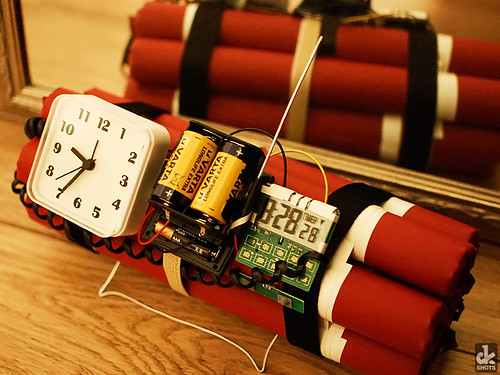
"time bomb" by dkshots is licensed under CC BY-NC 2.0
In PHP 7.4...
0 == "wait, what?";           // true
0 == "";                      // true
99 == '99 bottles of beer';   // true
42 == '     42';              // true
42 == '42     ';              // false, only sometimes
in_array(0, ['a', 'b', 'c']); // true

PHP 8.0
Numeric string:
trim($string)
Whitespace is ignored at the start and end, consistently
Behavior
Comparison
" 42 " < $a_num => Compare as numbers
'abc' < $a_num => Compare as strings
Function args
expects_int(" 42 "); => OK in weak mode, error in strict
expects_int("42 is the answer"); => always type error
Now go enable declare(strict_types=1);

"Burning Match Novoflex adaptor NX NIK 85mm Samsung NX200" by zen whisk is licensed under CC BY-ND 2.0
Have you done this?
$display = $user->isAdmin()
    ? $user->name() . ' (admin)'
    : $user->name() . ' (muggle)'
;
- Clean branching expression
- Encourages simple expressions
- Encourages factoring out to functions
- Only works for
true/false:-(
match() expressions
$display = match($user->isAdmin()) {
    true  => $user->name . ' (admin)',
    false => $user->name . ' (muggle)',
};
===match- Returns expression
- No fall-through
- Must be exhaustive
This...
switch ($var) {
    case 'a':
        $message = "The variable was a.";
        break;
    case 'b':
        $message = "The variable was b.";
        break;
    case 'c':
        $message = "The variable was c.";
        break;
    default:
        $message = "The variable was something else.";
        break;
}
Becomes this
$message = match($var) {
    'a' => 'The variable was a',
    'b' => 'The variable was b',
    'c' => 'The variable was c',
    default => 'The variable was something else',
};
Compound arms
echo match($operator) {
    '+', '-', '*', '/' => 'Basic arithmetic',
    '%' => 'Modulus',
    '!' => 'Negation',
};
Complex matches
$count = get_count();
$size = match(true) {
    $count > 0 && $count <=10 => 'small',
    $count <=50 => 'medium',
    $count >50 => 'huge',
};
Nullsafe methods
Null: The billion dollar mistake

"100 Billion Dollars" by Peat Bakke is licensed under CC BY 2.0
Cleaning up someone else's null
$user = get_user($id);
if (!is_null($user)) {
    $address = $user->getAddress();
    if (!is_null($address)) {
        $state = $address->state;
        if (!is_null($state)) {
            // And so on.
        }
    }
}
Eeew
PHP 8.0
$state = get_user($id)?->getAddress()?->state;
Short-circuiting nulls
$bestSaleItem = $catalog
          ?->getProducts(get_seasonal_type())
          ?->mostPopular(10)[5];
get_seasonal_type()not called if$catalogisnull- Doesn't work on the array from
mostPopular()
Moar warnings and errors
From warning to error exception
- Modify property of non-object
$not_object->foo = 'bar'- Writing to scalar value as array
$an_int[] = 4;- Invalid argument for
foreach() foreach($an_int as $x) {}foreach($not_traversable as $x) {}- Illegal offset
print $arr[$an_object]- Division by zero
$val = 5/0
From notice to warning
- Array offset on non-array
$an_int[4]- Access property of non-object
$a_string->name- Array to string conversion
print $an_array- Undefined property
$object->does_not_exist- Undefined variable
print $does_not_exist
Undefined variables are now Warnings!
Moar commas
2017
RFC: Allow trailing commas in...
- function arguments
- function declaration
- grouped namespaces
implementsclause for interfacesuseclauses for traits- class property list
- closure
usestatement
¯\_(ツ)_/¯
PHP 7.3
RFC: Allow a trailing comma in function arguments
Passed 30:10
¯\_(ツ)_/¯
PHP 8.0
Trailing commas in function definition: 
Trailing commas in closure use:
¯\_(ツ)_/¯
Commas!
class Address
{
    public function __construct(
        string $street,
        string $number,
        string $city,
        string $state,
        string $zip,     // This is new.
    ) {
    // ...
    }
}
More Commas!
$a ='A';
$b = 'B';
$c = 'C';

$dynamic_function = function(
  $first,
  $second,
  $third, // This is new, as before.
) use (
  $a,
  $b,
  $c,     // This is also new.
);
Constructor Promotion
PHP 7.4 and earlier

class FormRenderer
{
    private ThemeSystem $theme;
    private UserRepository $users;
    private ModuleSystem $modules;

    public function __construct(
        ThemeSystem $theme,
        UserRepository $users,
        ModuleSystem $modules
    ) {
        $this->theme = $theme;
        $this->users = $users;
        $this->modules = $modules;
    }

    public function render(Form $form): string
    {
        // ...
    }
}
PHP 8.0

class FormRenderer
{
    public function __construct(
        private ThemeSystem $theme,
        private UserRepository $users,
        private ModuleSystem $modules,
    ) { }

    public function renderForm(Form $form): string
    {
        // ...
    }
}
Mix and match
class FormRenderer
{
    private User $currentUser;

    public function __construct(
        private ThemeSystem $theme,
        private UserRepository $users,
        private ModuleSystem $modules,
    ) {
        $this->currentUser = $this->users->getActiveUser();
    }

    public function renderForm(Form $form): string
    {
        // ...
    }
}
Trivial value objects
Class MailMessage
{
    public function __construct(
        public string $to,
        public string $subject,
        public string $from,
        public string $body,
        public array $cc,
        public array $bcc,
        public string $attachmentPath,
    ) {}
}
Meta(meta(data))
(~Doctrine Annotations but in core)
Attributes
#[GreedyLoad]
class Product
{
    #[Positive]
    protected int $id;

    #[Admin]
    public function refillStock(int $quantity): bool
    {
        // ...
    }
}
Example: Tukio
function my_listener(MyEvent $event): void { ... }

$provider = new OrderedListenerProvider();

// How you normally add a listener to a provider.
$provider->addListener('my_listener', 5, 'listener_a', MyEvent::class);
Step 1: Define attribute
namespace Crell\Tukio;

use \Attribute;

#[Attribute]
class Listener implements ListenerAttribute
{
   public function __construct(
       public ?string $id = null,
       public ?string $type = null,
   ) {}
}
Step 1.5: Restrict attribute
namespace Crell\Tukio;

use \Attribute;

#[Attribute(Attribute::TARGET_FUNCTION | Attribute::TARGET_METHOD)]
class Listener implements ListenerAttribute
{
   public function __construct(
       public ?string $id = null,
       public ?string $type = null,
   ) {}
}
Step 2: Tag it
use Crell\Tukio\Listener;

#[Listener('listener_a')]
function my_listener(MyEvent $event): void { ... }

$provider = new OrderedListenerProvider();

$provider->addListener('my_listener', 5);
Step 3: Interpret it
Use Crell\Tukio\Listener;

/// A string means it's a function name,
// so reflect on it as a function.
if (is_string($listener)) {
    $ref = new \ReflectionFunction($listener);
    $attribs = $ref->getAttributes(
        Listener::class,
        \ReflectionAttribute::IS_INSTANCEOF,
    );
    $attributes = array_map(
        fn(\ReflectionAttribute $attrib) => $attrib->newInstance(),
        $attribs,
    );
}
Symfony 5.2
use Symfony\Bundle\FrameworkBundle\Controller\AbstractController;
use Symfony\Component\Routing\Annotation\Route;
use Symfony\Component\Security\Http\Attribute\CurrentUser;

class SomeController
{
    #[Route('/path', 'action_name')]
    public function index(#[CurrentUser] MyUser $user)
    {
        // ...
    }
}
Promoted parameter attributes
class Point
{
    public function __construct(
        #[Positive]
        public int $x,
        #[Positive]
        public int $y,
    ) {}
}
Applies to parameter and property

What does this do?
$new = array_fill(0, 100, 50);
50, 100 times?100, 50 times?
That's what this does!
array_fill(start_index: 0, count: 100, value: 50);
Any order
array_fill(
  value: 50,
  count: 100,
  start_index: 0,
);
Not allowed
array_fill(
  value: 50,
  0,
  count: 100,
);
Variadics
// Indexed array, so the values will map to indexed parameters.
$params = [0, 100, 50];
array_fill(...$params);

// Named array, so the values will map to named parameters.
$params = ['count' => 100, 'start_index' => 0, 'value' => 50];
array_fill(...$params);
Dynamic arguments
$args['value'] = $request->get('val') ?? 'a';
$args['start_index'] = 0;
$args['count'] = $config->getSetting('array_size');

$array = array_fill(...$args);
Value objects
class Url implements UrlInterface
{
    public function __construct(
        private string $scheme = 'https',
        private ?string $authority = null,
        private ?string $userInfo = null,
        private string $host = '',
        private ?int $port = 443,
        private string $path = '',
        private ?string $query = null,
        private ?string $fragment = null,
    ) {}
}
How are you going to call?
// PHP <= 7.4
$url = new Url('https', null, null, 'typo3.org', 443, '/blog', null, 'latest');
// PHP 8.0
$url = new Url(host: 'typo3.org', path: '/blog', fragment: 'latest');
// PHP 8.0
$url = new Url(
    path: '/blog',
    host: 'typo3.org',
    fragment: 'latest'
);
Attributes
class SomeController
{
    #[Route(
          path: '/path',
          name: 'action',
    )]
    public function someAction()
    {
        // ...
    }
}
The most important use case...
if (in_array(haystack: $arr, needle: 'A')) {
    // ...
}
¯\_(ツ)_/¯
Caveat coder
Parameter names are now part of your interface contract
Oh, yeah, JIT
In summary...
- You need to write half as much code
- Your code is more self-descriptive
- Undefined variables are always a warning
$needle/$haystackis no longer a thing